SIGHT: Safety Immersion and Gamified Hazard Training for Industry 5.0

Kick-Off Meeting: Welcome, Introductions, and the Plan Ahead

Fadel Megahed

PI

Arthur Carvalho

Co-PI

Mohammad Mayyas

Co-PI

Jay Shan

Co-PI

July 01, 2025

Meeting Goals

Establish shared understanding of the project’s purpose and vision

Introduce team members and their roles

Outline project scope and deliverables for Q1

Clarify team structure and communication protocols

Review evaluation and safety oversight approach

Define roles of partners like MaxByte, MeetKai, and Cincinnati Radiator

Identify immediate next steps and action items

Welcome, Project Overview, and Vision

Ice-Breaker: Your Knowledge of Ohio Manufacturing?

00:45

Ohio’s Manufacturing Industry: Employment and GDP
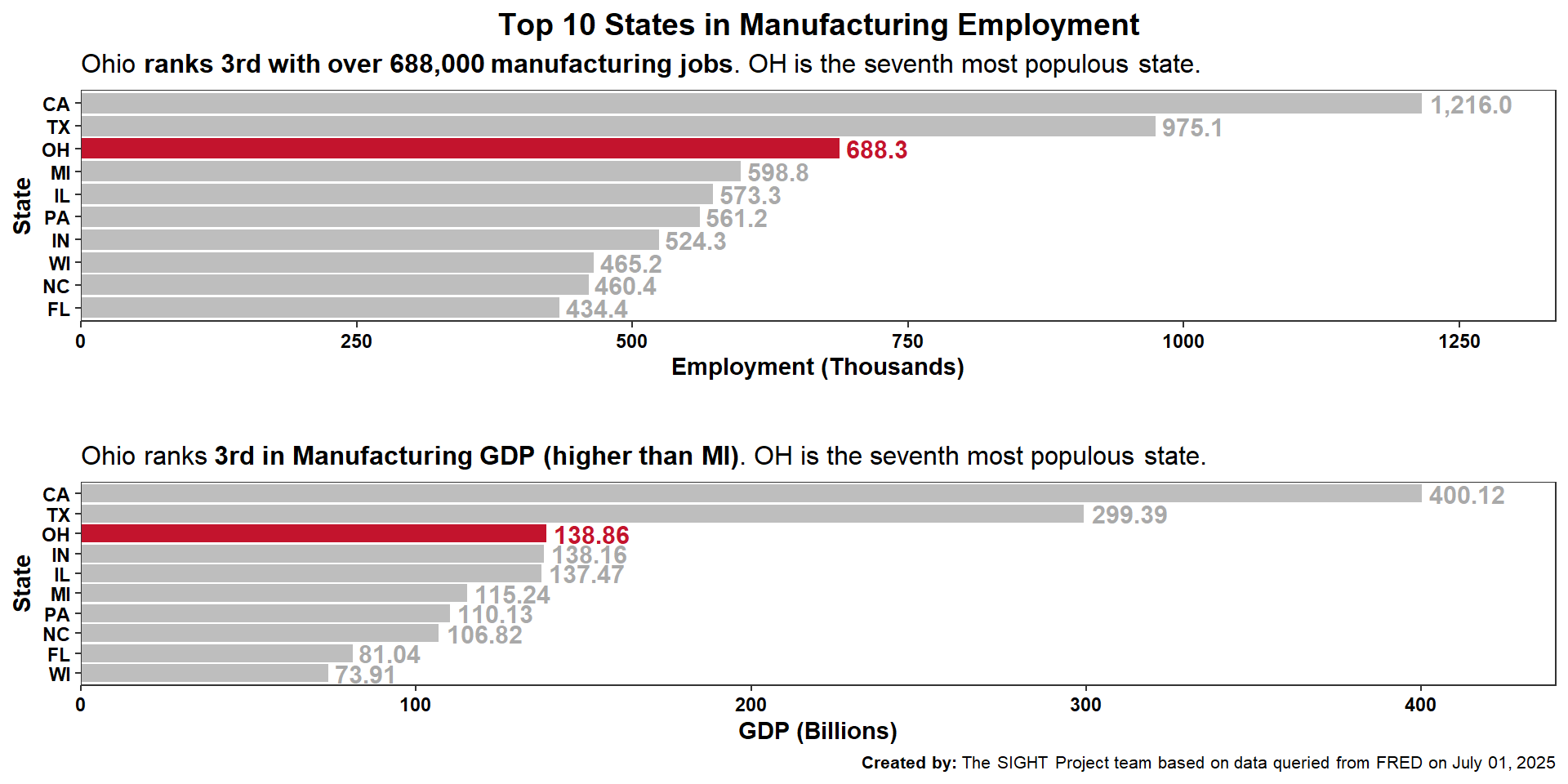
Ohio ranks third nationally in both manufacturing employment and manufacturing GDP, highlighting its strong position among the top U.S. manufacturing states.

Ohio ranks third nationally in both manufacturing employment and manufacturing GDP.

Ohio’s Manufacturing Industry: Safety Issues

From 2007-2017, the OHBWC provided WC insurance for \(\frac{2}{3}\) of Ohio’s workers1.

From the analysis of claims for 2007-2017 from private OHBWC employers:1

  • In FY 17 alone, the OHBWC paid $1.635 B in total benefits (per p. 49).

  • A total of 31,703 LT cases caused by contact with objects and equipment.

  • In the manufacturing sector, contact with objects/equipment represented:

    • 34.85% of the sector’s LT claims.
    • 57.11% of the sector’s total (LT + MO) claims.

Notes:

  • The OHBWC (established in 1912) is the largest state-run WC system in the US.

  • Lost-time (LT) claims = 8 or more days away from work (\(\ge 8\) DAW)

  • Medical-only (MO) claims (medical care only and/or \(\le 7\) DAW)

Reference 1. J Safety Res. 2021 Sep 17;79:148–167 (Publicly available here).

Ohio’s Manufacturing Industry: Safety Issues Root-Causes

  • Standardized machine guarding checklists are encouraged to identify hazards and system deficiencies, especially in metal-working and similar industries1.
  • Temporary workers have higher injury rates involving Contact with Objects and Equipment due to:2 (a) less safety training; and (b) shorter job tenure.
  • Recognized interventions to reduce such injuries include:
    • Machine guarding and safety saws3
    • PPE: safety glasses, gloves, awareness campaigns4,5
    • NIOSH guidance: Hazardous Energy Control Resource Guide6
  1. J Safety Res. 2021 Sep 17;79:148–167 (Publicly available here).
  2. Am J Ind Med . 2017 Oct;60(10):841-851 (Paper link).
  3. Am J Ind Med. 2014; 57(12):1398-1412 (Publicly available here).
  4. Am J Ind Med. 2000; 18(4S):27–32 (Paper link).
  5. Orthopedics. 1995;18(11):1067–1071 (Paper link).
  6. Hazardous Energy Control: Lockout and Other Means. 2025 (NIOSH Guidance and Resources).

Proposing SIGHT (Safety Immersion and Gamified Hazard Training)

Traditional safety training is static and generic, typically delivered only once at onboarding. It doesn’t adapt to evolving hazards or worker needs.

SIGHT introduces two major innovations:

  1. Dynamic VR training – Gamified, repeatable modules using generative AI to adapt to worker skill level and real-world scenarios.
  2. AR coaching – Real-time, IoT-enhanced guidance for productivity and safety using speech interfaces and sensor data.

Outcomes:

  • Personalized, immersive hazard recognition and response
  • Fewer injuries (cuts, lacerations, crush incidents)
  • Stronger link between safety and productivity
  • Scalable solution for manufacturers of all sizes across Ohio

SIGHT in Action: A Vision for Smarter Safety Training

Note: Our AI-generated concept video is intended to visually communicate our vision for SIGHT as an adaptive, immersive training solution that integrates safety and productivity by leveraging XR and generative AI technologies.

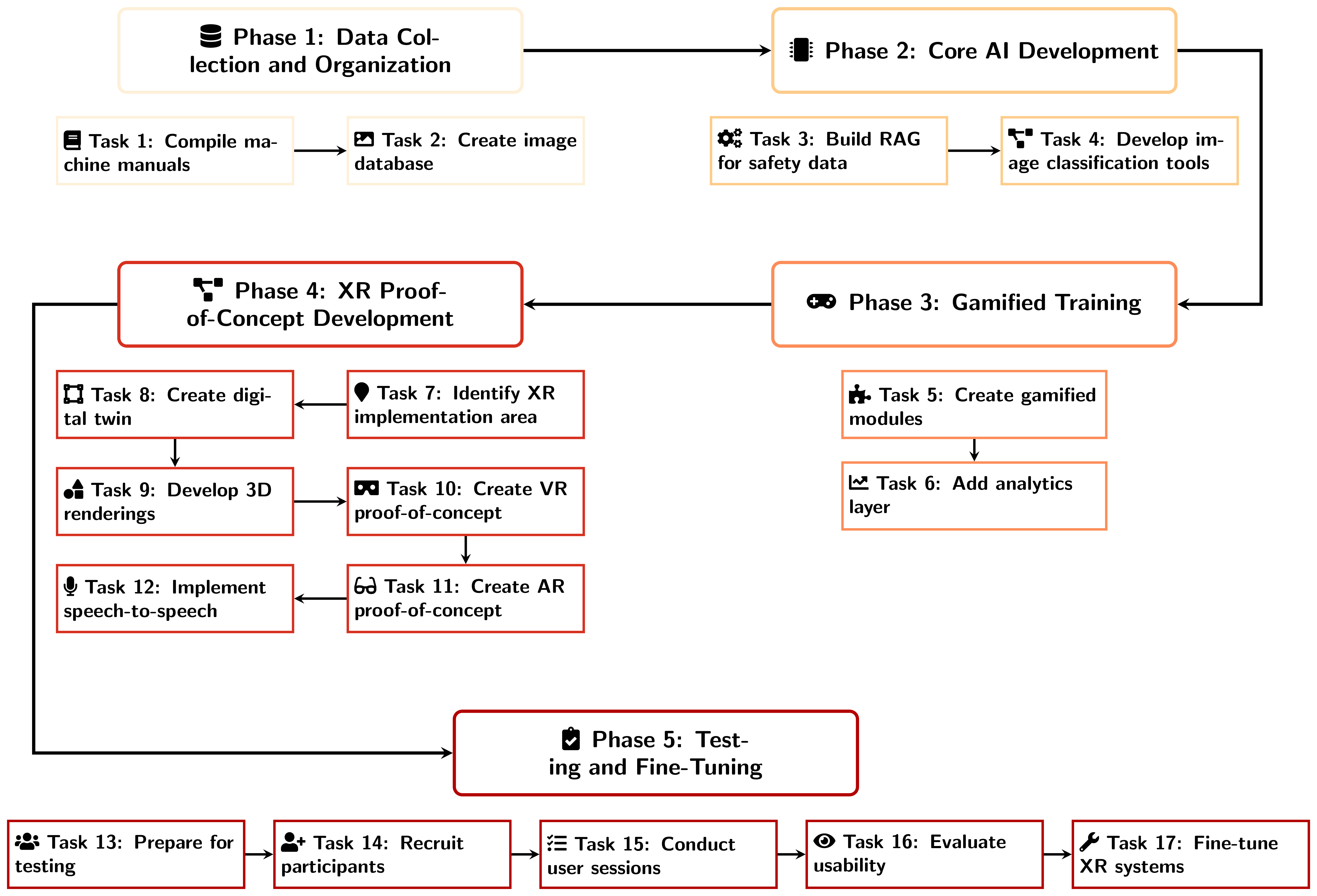
From Vision to Reality: Our Five-Phased Approach
The SIGHT Team and Introductions

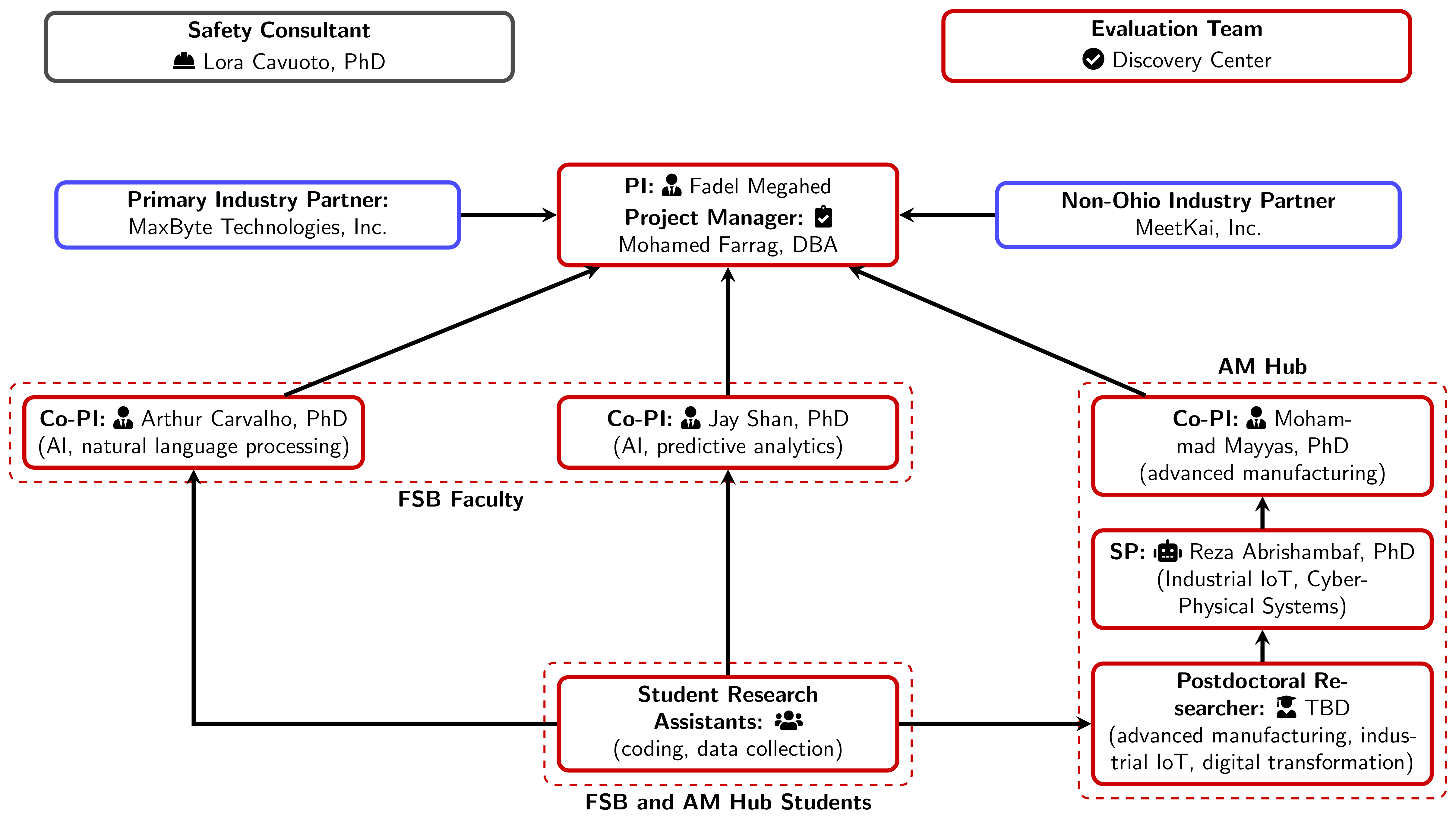
Visual Mapping of the Personnel and Industry Partners
MU: Fadel Megahed (PI)

  • Role at Miami: Raymond E. Glos Professor of Information Systems & Analytics

  • SIGHT Project Role: PI

  • Research Expertise: AI applications in occupational safety.

  • Why does this work matter to me? Doing good with AI and analytics.

MU: Arthur Carvalho (Co-PI)

  • Role at Miami: Dinesh & Ila Paliwal Innovation Chair & Associate Professor of Information Systems & Analytics
  • SIGHT Project Role: Co-PI
  • Research Expertise: AI, machine learning, decision support systems
  • Why does this work matter to me? It’s exciting to build intelligent systems that improve worker safety.

MU: Mohammad Mayyas (Co-PI)

  • Role at Miami: Associate Dean for Strategic Initiatives, Chair & Professor of Engineering Technology
  • SIGHT Project Role: Co-PI
  • Research Expertise: Advanced manufacturing, automation, material handling
  • Why does this work matter to me? I want to empower the next-gen workforce through hands-on, tech-enabled training.

MU: Jay Shan (Co-PI)

  • Role at Miami: Associate Professor of Information Systems & Analytics
  • SIGHT Project Role: Co-PI
  • Research Expertise: Data management, applied AI, systems implementation
  • Why does this work matter to me? I love turning data into action and am excited about this use case of generative AI technology.

MU: Reza Abrishambaf (Senior Personnel)
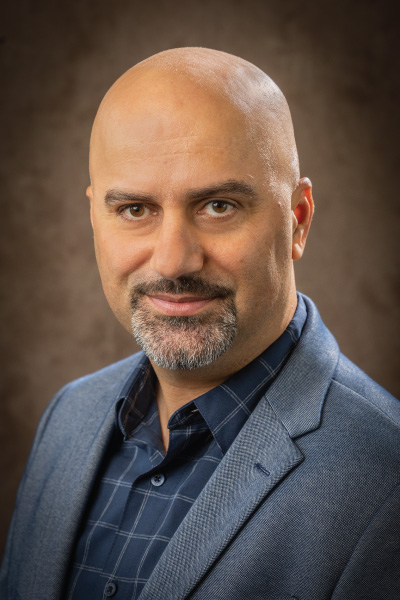
  • Role at Miami: Associate Professor and EMET Program Coordinator, Engineering Technology
  • SIGHT Project Role: Senior Personnel
  • Research Expertise: Industrial Internet of Things (IIoT), digital transformation, sensor networks
  • Why does this work matter to me? I enjoy helping students and industries thrive through smart technology adoption.

MU: Jinjuan She (Affiliate Investigator)

  • Role at Miami: Associate Professor of Mechanical and Manufacturing Engineering
  • SIGHT Project Role: Affiliate Investigator
  • Research Expertise: Human-technology interactions, cognitive learning, design theory and methods
  • Why does this work matter to me? The project is well aligned with my work on human-technology interactions and my passion about conducting work at the intesection of engineering and psychology.

MU: Austin Hamilton (Student Assistant)

  • Role at Miami: Graduate student in Computer Science and Software Engineering
  • SIGHT Project Role: Student Assistant – supports software development and XR system testing
  • Technical Expertise: Unity, C#, C++, Avalonia UI, and shader development
  • Why does this work matter to me? I enjoy building tools and user interfaces that make complex systems more intuitive. This project gives me the chance to design interfaces that help people learn and stay safe on the job.

MU: Mohamed Farrag (Project Manager)

  • Role at Miami: Visiting Assistant Professor of Information Systems & Analytics
  • SIGHT Project Role: Project Manager
  • Professional Expertise: Strategic leadership, finance, project management
  • Why does this work matter to me? I’m passionate about supporting teams that drive meaningful change.

MU: Maressa Dixon (Project Evaluator)

  • Role at Miami: Senior Research Associate & Development Team Leader, Discovery Center
  • SIGHT Project Role: Project Evaluator
  • Research Expertise: Mixed-methods evaluation, equity-centered educational research
  • Why does this work matter to me? I’m committed to evaluating programs that uplift learners.

MU: Yue Li (Project Evaluator)

  • Role at Miami: Associate Director, Discovery Center
  • SIGHT Project Role: Project Evaluator
  • Research Expertise: STEM education and evaluation
  • Why does this work matter to me? I’m excited about the workforce development aspect of the project and the technological innovation aspect of integrating AI in safety training.

UB: Lora Cavuoto (Safety Consultant)

  • Role at University at Buffalo: Professor of Industrial and Systems Engineering
  • SIGHT Project Role: Safety Consultant – guides hazard assessment and training content design
  • Research Expertise: Occupational biomechanics, ergonomics, fatigue modeling, workplace safety
  • Why does this work matter to me? I’m passionate about translating safety science into practical tools that protect workers.

Digital Transformation and AR DevOps Partner: Maxbyte, Inc.

  • Who we are:
    Harish Chittaluri (Technical Lead)
    Gift Selvin (Director for Learning Programs)
    Ramshankar C S (Chief Executive Officer)

  • What is your role at Maxbyte?

  • What’s your role in the SIGHT project?

  • What technical expertise are you bringing to the table?

Digital Transformation and AR DevOps Partner: Maxbyte, Inc.

Discussion of previous AR, AI and digital transformation work in the U.S./Ohio.
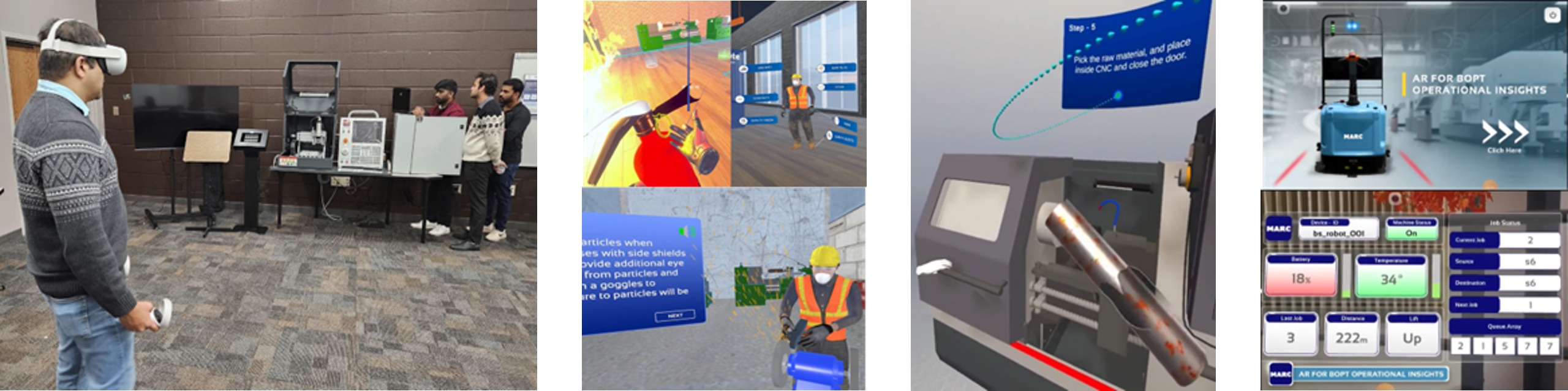
Figure (left to right): Maxbyte’s first IIoT training at the Virginia Beach CoE for Tidewater Community College, VR solution screenshots (Fire Safety and CNC Training), and IIoT-integrated AR solution.

AI and VR DevOps Partner: MeetKai, Inc.

  • Who we are:
    Kevin Bresnahan (VP of Development)
    Jacquie Babakanian (Chief of Staff)

  • What is your role at MeetKai?

  • What’s your role in the SIGHT project?

  • What technical expertise are you bringing to the table?

AI and VR DevOps Partner: MeetKai, Inc.

Discussion of previous VR projects and current AI developments by MeetKai

Manufacturing & Workforce Recruitment Partner: Cincinnati Radiator

  • Who we are:
    Prasenjit Ray (General Manager)
    Chuck Baker Sr. (Safety Lead)

  • What is your role at Cincinnati Radiator?

  • What safety or operational challenges are you hoping this project will help address?

  • What excites you about being part of SIGHT?

Manufacturing & Workforce Recruitment Partner: Cincinnati Radiator

Discussion of Cincinnati Radiator’s manufacturing environment and safety needs

Deliverables and Q1 Priorities

Technical Deliverables (TD): Phases I-III

Phase Due Date TD Description
I Oct 2025 1 Compile 100% standardized operational and safety documentation for the three selected target machines (Bridgeport Manual Mill, TL-1 CNC, Universal Cobot).
2 Create a comprehensive image database with a minimum of 60 high-quality, metadata-tagged images per machine, covering multiple angles and scenarios.
II Dec 2025 3 Achieve ≥80% response accuracy for safety-critical queries using a RAG system, validated by expert review and user testing.
4 Image classification system achieves ≥80% accuracy on holdout dataset under standard lighting and ≥75% under varying conditions.
III Mar 2026 5 Implement analytics framework capturing data from ≥90% of training interactions within 5 seconds per interaction.

Technical Deliverables (TD): Phases IV - V

Phase Due Date TD Description
IV Dec 2026 6 Build functional VR and AR prototypes integrating AI systems (RAG, image classification, speech-to-speech) and 3D/AR overlays connected to analytics backend.
7 Ensure first-time users can complete setup and initiate use of VR and AR systems in under 30 minutes.
V Jun 2027 8 Recruit a balanced group of ≥36 participants (students and professionals) to complete and evaluate VR and AR testing scenarios.
9 Deploy refined web-based VR app for public access, with the link included in the final report.

Administrative Deliverables – Year 1 (Through June 30, 2026)

AD Due Date Description
1.1 July 25, 2025 Attend FY26–27 Grant Kick-Off Meeting and sign attendance sheet.
2.1 July 25, 2025 Submit Project Schedule Planning Tool with bi-monthly meeting schedule.
4.1 Aug 29, 2025 Submit completed Project Management Plan using template.
2.2 Sep 12, 2025 Submit July/Aug Project Meeting materials (attendance, agenda, minutes, etc).
5.1 Sep 30, 2025 Submit completed Project Risk Mitigation Plan.
7.1 Oct 10, 2025 Submit Q1 Quarterly Progress Report.
3.1 Oct 24, 2025 Attend and verify participation in Q2 Quarterly Grant Meeting.
6.1 Oct 24, 2025 Submit completed Project Communication Plan.
2.3 Nov 14, 2025 Submit Sep/Oct Project Meeting materials.
2.4 Jan 9, 2026 Submit Nov/Dec Project Meeting materials.
7.2 Jan 9, 2026 Submit Q2 Quarterly Progress Report.
3.2 Feb 27, 2026 Attend and verify participation in Q3 Quarterly Grant Meeting.
2.5 Mar 13, 2026 Submit Jan/Feb Project Meeting materials.
7.3 Apr 10, 2026 Submit Q3 Quarterly Progress Report.
2.6 May 8, 2026 Submit Mar/Apr Project Meeting materials.
3.3 Jun 26, 2026 Attend and verify participation in Q4 Quarterly Grant Meeting.

Administrative Deliverables – Year 2 (After June 30, 2026)

AD Due Date Description
8.1 Jul 17, 2026 Submit completed Interim Progress Report.
2.7 Jul 10, 2026 Submit May/Jun Project Meeting materials.
2.8 Sep 11, 2026 Submit Jul/Aug Project Meeting materials.
7.4 Oct 9, 2026 Submit Q5 Quarterly Progress Report.
3.4 Oct 23, 2026 Attend and verify participation in Q6 Quarterly Grant Meeting.
2.9 Nov 13, 2026 Submit Sep/Oct Project Meeting materials.
2.10 Jan 15, 2027 Submit Nov/Dec Project Meeting materials.
7.5 Jan 15, 2027 Submit Q6 Quarterly Progress Report.
3.5 Feb 26, 2027 Attend and verify participation in Q7 Quarterly Grant Meeting.
2.11 Mar 12, 2027 Submit Jan/Feb Project Meeting materials.
7.6 Apr 9, 2027 Submit Q7 Quarterly Progress Report.
6.2 May 28, 2027 Submit evidence of dissemination activities and postings.
2.12 May 14, 2027 Submit Mar/Apr Project Meeting materials.
2.13 Jun 18, 2027 Submit May/Jun Project Meeting materials.
3.6 Jun 25, 2027 Attend and verify participation in Q8 Quarterly Grant Meeting.
9.1 Jun 30, 2027 Submit Final Report.
9.2 Jun 30, 2027 Submit Final Presentation.

Expenditure Reports and Invoices

Quarterly Report Period Expenditure Report and Invoice Due Date
July 1 – September 30, 2025 October 31, 2025
October 1 – December 31, 2025 January 30, 2026
January 1 – March 31, 2026 May 1, 2026
April 1 – June 30, 2026 July 31, 2026
July 1 – September 30, 2026 October 30, 2026
October 1 – December 31, 2026 January 29, 2027
January 1 – March 31, 2027 April 30, 2027
April 1 – June 30, 2027 July 30, 2027

Note: Recipients may invoice for remaining outstanding unobligated balances after the fourth quarterly expenditure report and on the Final Expenditure Report, provided these obligations were incurred prior to the end of the project period and fall within the unobligated balance on the expenditure report. Specific requirements for Quarterly Invoices and Quarterly Expenditure Reports can be found in the WSIC GAPP Manual. We will also provide additional detail pertaining to these reports after we attend the sponsor’s kick-off meeting on July 17, 2025.

Open Discussion

What questions, concerns, or ideas do you have so far?

Next Steps and Wrap-Up

🎓 MU Immediate (Non-Technical) Assignments

    • Responsibility: Co-PIs
    • Due : July 15, 2025


    • Responsibility: Co-PIs
    • Due : August 01, 2025


    • Responsibility: Jay Shan
    • Due : July 15, 2025

🤝 Company Contacts

MaxByte and MeetKai

Contractual Agreement

  • Due : July 08, 2025
  • Note: Must execute contract within 45 days from today.

Technical Meetings & Needs from MU

  • Due : July 08, 2025


🏢 Cincinnati Radiator

Point of Contact for Bi-Monthly Meetings

  • Due : July 08, 2025

Next Meeting

A poll will be sent for next meeting later this week.

Recap: Why SIGHT, and Why Now?

  • Traditional training is static, generic, and not adaptive to modern hazards
  • Temporary and new workers face higher injury rates due to limited hazard recognition
  • We’re introducing AI-driven VR/AR safety training that is immersive, personalized, and responsive
  • Now is the moment — generative AI and XR tech are mature enough to transform training
  • Rising injury costs and a rapidly evolving workforce demand a smarter, scalable solution

Recap: Who Benefits from SIGHT?

  • Workers: Engaging, scenario-based training from day one
  • Employers: Lower injury rates, stronger safety culture, improved productivity
  • Ohio manufacturing sector: A future-ready workforce development model
  • Researchers & educators: A testbed for real-world AI and XR in safety applications